ForexTime FXTM review: Could this be the best forex trading tool? review - TechRadar
ForexTime FXTM review: Could this be the best forex trading tool? review - TechRadar |
- ForexTime FXTM review: Could this be the best forex trading tool? review - TechRadar
- Volatility was a Bank’s Friend During Q1 as FX Trading Flourished - ETF Trends
- How to get started with Forex Trading in South Africa - SA Shares - Bizcommunity.com
- Overview: What You Need to Know About Forex Brokers - NuWire Investor
| ForexTime FXTM review: Could this be the best forex trading tool? review - TechRadar Posted: 15 May 2020 07:15 AM PDT Are you searching for the best forex trading app? If so, give ForexTime FXTM some thought. Through ForexTime FXTM, you can access numerous currency pairs, commodities, single-stock shares, and contracts for difference (CFDs). As you'll find out in the following ForexTime FXTM review, this app stands out for its quick trades and withdrawals, which are facilitated by the MetaTrader platform. Most FXTM accounts are based on MetaTrader 4 (MT4). ForexTime FXTM: What does it offer?ForexTime, also known as FXTM, is a financial service and automated currency broker. FXTM customers can use their accounts to trade currencies, CFDs, shares, and commodities. In total, there are more than 250 different financial instruments to access through FXTM.
With the FXTM app, available on both Android and iOS devices, you can monitor live rates and adjust your positions wherever you are. The inclusion of demo accounts and a flexible leverage system makes this a good trading platform for beginners and experienced forex traders alike. This service is registered and regulated in the UK, South Africa, and Cyprus but does not serve customers in the USA, Canda, Japan, or a handful of other countries. ForexTime FXTM: Opening an accountAfter that, you can finish the account-opening process in your browser or on a mobile device by installing the FXTM Trader app. In total, there are five steps to complete before you can begin trading. You'll need to add personal and tax information to your profile, upload photos of some ID and, finally, make a deposit. Rather than using real cash, you can start practicing trades with a risk-free virtual account. This is a great way to get a good understanding of how the ForexTime FXTM trading system works.
ForexTime FXTM: Account TypesYou can choose between six different types of FXTM trading account. Three of these are Standard Accounts and three are Electronic Communications Network (ECN) Accounts.
ECN accounts are designed for forex experts and don't have a maximum number of orders or volume of lots in an order. Trading with an ECN account results in a better rate thanks to a reduced average percentage in point (pip) values but requires a higher minimum deposit amount. FXTM Pro ECN accounts, for example, only offer super low spread values if a balance of 25,000 USD/EUR/GBP is maintained. FXTM's three non-ECN accounts are the Standard, Cent, and Shares accounts. Cent accounts work in a balance of cents rather than dollars and have a tiny minimum deposit amount of $10. Meanwhile, the Share accounts allow you to trade in European and US shares and have a reduced minimum spread value of 0.1, compared to 1.3 for Standard accounts and 1.5 for Cent accounts. ForexTime FXTM: FeaturesThe ForexFXTM platform is full of handy features to help you manage trades. We were especially impressed by how easy it was to modify our positions using cross-device trading, which enabled us to open a trading position on one device and close it from another.
A major advantage of using this trader is that FXTM is regulated by authorities in the UK and Cyprus, both of which have deposit protection insurance. As a consequence, if you are trading from within the EU or UK through FXTM, you could be eligible for £85,000 or €20,000 in cases of brokerage insolvency. Newcomers to foreign exchange trading will appreciate ForexTime's vast library of educational resources. Here, you can explore ebooks, forex trading webinars, and glossaries of common forex trading terms. ForexTime also releases weekly market analysis videos filled with expert advice about new trading strategies. Meanwhile, more advanced users will be able to use the ForexTime FXTM Pivot Points Strategy to enhance their trading style. This FXTM tool enables you to perform five-point calculations to decide what position to take on a range of financial instruments. ForexTime FXTM: SupportBesides the wealth of informative educational materials on the FXTM site, this platform has a solid customer support service. You can get assistance from agents 24 hours a day over the phone, via live chat, or through third-party platforms like WhatsApp and Telegram.
ForexTime FXTM: Final verdictThe ForexTime FXTM platform remains one of the best forex trading apps available today. Users who are able to meet the deposit minimums required to open an ECN account will receive highly competitive rates and avoid any limits on order volume. But ForexTime FXTM isn't just good for professionals. There's a lot to offer here for casual and first-time traders thanks to a large backlog of trading guides and a fully-featured mobile app that lets you modify your positions on the go. Whatever kind of trader you are, you can be confident that FXTM is a safe way to make foreign exchange trades. That's because ForexTime FXT is registered in countries with strict deposit protection schemes and has built up a solid reputation since opening for business in 2011. ForexTime FXTM: The competitionForexTime FXTM isn't the only trading app out there. For first-time users looking for an app more tailored toward improving their trading skills, Stock Trainer is an alternative option worth considering. This virtual trading app provides the ideal environment in which to learn more about how foreign exchange markets operate. At the other end of the spectrum, for those who feel that ForexTime FXTM's 250 financial instruments don't offer enough variety, Admiral Market is a popular competitor with a large selection of stock, futures, and forex markets.  | |
| Volatility was a Bank’s Friend During Q1 as FX Trading Flourished - ETF Trends Posted: 15 May 2020 08:03 AM PDT Forex trading has been an unloved division of banks during the height of the extended bull market, but the volatility resulting from the coronavirus pandemic has become a bank's best friend during the first quarter. Forex trading divisions flourished despite a tumultuous Q1. "The four biggest banks on either side of the Atlantic accrued nearly $29 billion in revenue from trading bonds, currencies, commodities and equities in the first quarter — up by a quarter from a year ago," a Reuters report noted. "Equity trading and bond sales were exceptionally strong at most banks, but March-quarter revenue growth also came from an asset class that for years dragged on profits — foreign exchange." "Banks usually group FX under the broader umbrella of FICC — fixed income, currencies, commodities — so it can be hard to deduce its exact share of in revenues," the report added. "But data from research firm Coalition shows currency trading revenues at the top 12 banks globally hit a decade-high in the January-March quarter." An interesting all-world play that hedges against currency fluctuations against the U.S. dollar is the Xtrackers MSCI All World ex U.S. Hedged Equity ETF (DBAW). DBAW seeks investment results that correspond generally to the performance, of the MSCI ACWI ex USA US Dollar Hedged Index. DBAW uses a "passive" or indexing investment approach, seeks investment results that correspond generally to the performance, of the underlying index, which is designed to track the performance of equity securities in developed and emerging stock markets while mitigating exposure to fluctuations between the value of the USD and the currencies of the countries included in the underlying index. It will invest at least 80% of its total assets in component securities of the underlying index. ETF traders looking to play dollar moves can look to funds like the Invesco DB US Dollar Bullish (NYSEArca: UUP) or the WisdomTree Bloomberg U.S. Dollar Bullish Fund (NYSEArca: USDU). UUP tracks the price movement of the U.S. dollar against a basket of currencies, including the euro, Japanese yen, British pound, Canadian dollar, Swedish krona, and Swiss franc. On the other hand, the actively managed USDU tracks the USD against a broader basket of developed and emerging market currencies, including China, India, South Korea, Switzerland, Australia, Mexico, the United Kingdom, Canada, Japan, and Europe. USDU provides investors with
For more market trends, visit ETF Trends.  | |
| How to get started with Forex Trading in South Africa - SA Shares - Bizcommunity.com Posted: 15 May 2020 07:16 AM PDT
The Gold Standard Monetary System was created in 1875 and this considered the most essential event in the history of currency trading followed by the introduction of changes in exchange rates in 1947 when the IMF started operating. Through the years, and as technology improved, Forex Trading started becoming more widespread in addition to easier, especially when computers were invented preceded with an increase in availability and distribution thereof. Forex trading increased significantly through the years and by 2004, it developed into a $1.9tn a day market and it is, to this day, the largest financial market worldwide. Today, the Forex market sees currencies traded to the value of approximately $5tn a day. Forex is traded over-the-counter, meaning that all trading is done electronically and telephonically by banks and other market participants. Currencies are what make up the Forex market, and the majority of volume is concentrated in a small number of currencies such as the ZAR,USD, EUR, JPY, GBP, CAD, CHF, and AUD. These currency pairs are considered the Forex Major currencies and more often than not they are paired with one another such as EUR/USD, USD,JPY, GBP/USD, USD/CHF, USD/CAD, and AUD/USD. The US Dollar remains the top currency against which all other currencies are weighed and traded as it is the global reserve currency as the United States has the world's largest economy paired with a stable political system. Forex Brokers in South Africa To start trading Forex in South Africa, the trader in question will have to select a broker through which trading can be done. There are various brokers who cater for South African traders.The most important thing to look at when choosing a broker is ensuring that the broker is regulated by a reputable authorizing entity. Even though offshore accounts are attractive due to higher levels of leverage offered, amidst other features, selecting a reputable broker is crucial in ensuring that client funds are safe and that traders will not lose more than they are willing to invest when trading. There are numerous Forex brokers to choose from and when evaluating brokers, it comes down to the needs of the trader that will determine which broker is better suited to their needs. Numerous brokers offer numerous products and services, some of the best brokers recommended for South African traders include, but is not limited to: It is essential that traders rate the level of service they can expect to receive from various brokers by evaluating hands-on reviews on these brokers which will allow them to make an informative decision backed with reviews from other traders. Merely choosing a broker according to the reviews and ratings the broker receives is not advisable, the trader will have to visit the broker's website and open a demo account to further explore the offering of the broker and determine whether it suits the trader. Forex Trading in South Africa mid-Covid-19 During 2019, Forex market volatility was fairly low, and brokers were seeing significantly low client activity, but since the beginning of 2020 and the emergence and spread of Covid-19 on a global scale, the volatility of markets have been the highest that they have ever been. The pandemic has caused off-the-charts market volatility with brokers being some of the biggest benefactors from this while the rest of the world has been feeling the significant pressure brought on in the wake of Covid-19's impact on business sectors and economies. Since the end of February, brokers have seen this significant increase in trading volumes as the pandemic spread from one country to the next. With volatile markets as result of Covid-19, short term traders have been provided with ample opportunities to make use of the market volatility, especially day traders, and intraday traders who attempt to call the bottom resulting in great profits. South Africa's economy has been hovering above crises and crashes long before Covid-19 emerged and, in its wake, with the depreciation of the rand, ZAR is more or less on the same level as AUD. The USD/ZAR currency pair is breaking high above historical resistance at R18.31/$ where it had been at around R16.45/$ only in March with suggested gains forecasted for as long as the pandemic continues. How to trade safely during the Covid-19 pandemic While there are numerous traders, especially short term day traders, who are using the pandemic and the volatile markets to their advantage to increase chances of great profits, traders should always proceed with caution. This may provide ample opportunity to traders in learning new trading strategies that revolve around high market volatility, but for those who are not quite willing to risk it, it is advised that they trade as usual, with the necessary precautions in place. While traders might be battling to wrap their heads around how currencies are reacting to Covid-19 as the pandemic continues and the influx of news from all over the world, traders are advised to take a break from trading. Investing in safe haven currencies such as JPY and CHF with the volatility of the Forex Market continuing, is also recommended given that the pandemic does not adversely affect the country, its economy and therefor the currency. Traders who greatly depend on fundamental analysis in determining their trading strategy always stay up to date with the news but staying up to date with any Forex related news regarding Covid-19 is recommended. Final thoughts Forex trading in itself is complex and while there is ample opportunity to gain great profits, the risks involved need to be evaluated and traders need to have a clear understanding of what they stand to lose in addition to their available capital to compensate for losses. South Africans who would like to start trading Forex need to ensure that they select a broker that is regulated, reputable and that can cater for their trading needs. In addition, South African traders need to be aware of the risks in trading Forex in Covid-19 circumstances along with ensuring that they manage their risks efficiently while keeping up to date with news sources to ensure they manage their trading activities accordingly.  | |
| Overview: What You Need to Know About Forex Brokers - NuWire Investor Posted: 06 May 2020 03:24 PM PDT 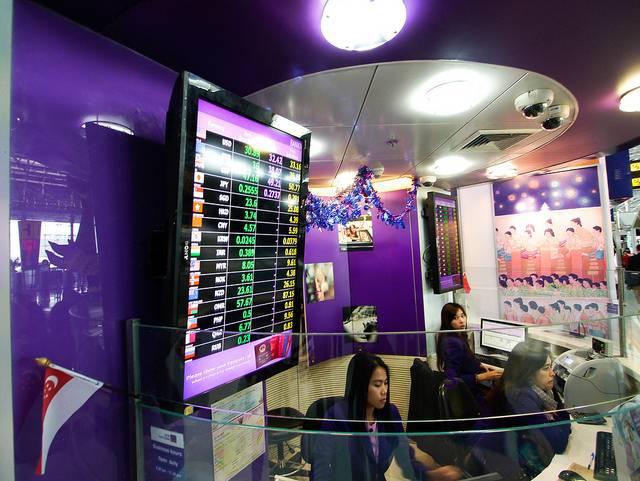 The term 'forex' is a mixture of the words 'foreign currency' and 'exchange, which should give you some initial insight into what the process involves. Through forex trading foreign currencies are bought and sold between countries for a variety of reasons, most prominently relating to trade, tourism, and commerce. Forex brokers are firms that oversee this trading on behalf of clients/businesses. One of the factors that makes forex trading so unique is its lack of a centralized trading hub. Trading is done entirely online across the globe, 24 hours a day for 5 and a half days per week, covering almost all possible time zones. This makes it one of the most active financial sectors with price quotes in nearly constant movement. All of this makes forex brokers all the more useful. Navigating such a vibrant market can be complicated. To help you get started, you could track down a list of forex brokers accepting US clients, but for now, let's get into exactly what forex brokers do. What are Forex Brokers?Sometimes alternatively known as retail forex brokers or currency trading brokers, forex brokers are utilized by individuals and institutions alike to give them unique insight into forex trading. Currency exchange is done between specific pairs, the majority of which are covered by forex brokers. These include:
But how does it all work? Forex brokers allow traders to buy and sell these pairs of currencies. For instance, if you wanted to exchange US dollars for British pounds, you would purchase the USD/GBP pair through a forex broker. Profit is then made when the pair is sold at a time the exchange rates are higher than what they were at the time of initial purchase. A forex broker allows for a trader to keep a close eye on the rise and fall of exchange rates. Through this, they can identify the optimal time to purchase a currency pair based on their potential returns. As is the case with any stock market, the higher the reward the higher the risk, and the potential for losses is always present. Signing up with a forex broker is easier than ever. It's all done online and the only requirement is a deposit into the trader's account to serve as collateral. The broker will then provide leverage so that traders can trade in higher quantities than the deposit offered. Depending on the brokerage this leverage can vary enormously, but a higher leverage will always entail a higher risk of loss. Forex Trading RegulationsBefore leaping into the world of forex trading or aligning yourself with any particular forex broker, it's important that you know the reputation of the brokerage in question. Thankfully there are two institutions dedicated to holding fraudulent companies to account. They are:
Both of these entities work to publicize the malpractice of brokerages, which makes them valuable resources for any new trader. The official sites of both the CFTC and NFA feature large amounts of information on various brokers who you shouldn't do business with. Luckily most forex brokers offer a trial period for users to get used to how the trading process works before you commit to their services. This is a tell-tale sign of a broker worth your time, as a fraudulent broker just wants to get as much money out of you as quickly as possible. An authentic forex brokerage is invested in your custom. The Bottom LineWe hope this article has given you food for thought about diving into the exciting world of forex, or just answered a few questions you had about what it is and how it works. Be sure to do your research before getting involved!  |

| You are subscribed to email updates from "forex trading" - Google News. To stop receiving these emails, you may unsubscribe now. | Email delivery powered by Google |
| Google, 1600 Amphitheatre Parkway, Mountain View, CA 94043, United States | |


Comments
Post a Comment